
PERSPECTIVE
3D Rendering for Architects: Faster Design Reviews Without Losing Accuracy
As architecture firms adopt AI and real-time tools while navigating a soft market, visualization is moving earlier in the process. The opportunity is not simply to render faster. It is to make design decisions easier to test, explain and approve without losing the accuracy of the architecture.
Sphere Design · septiembre 2026
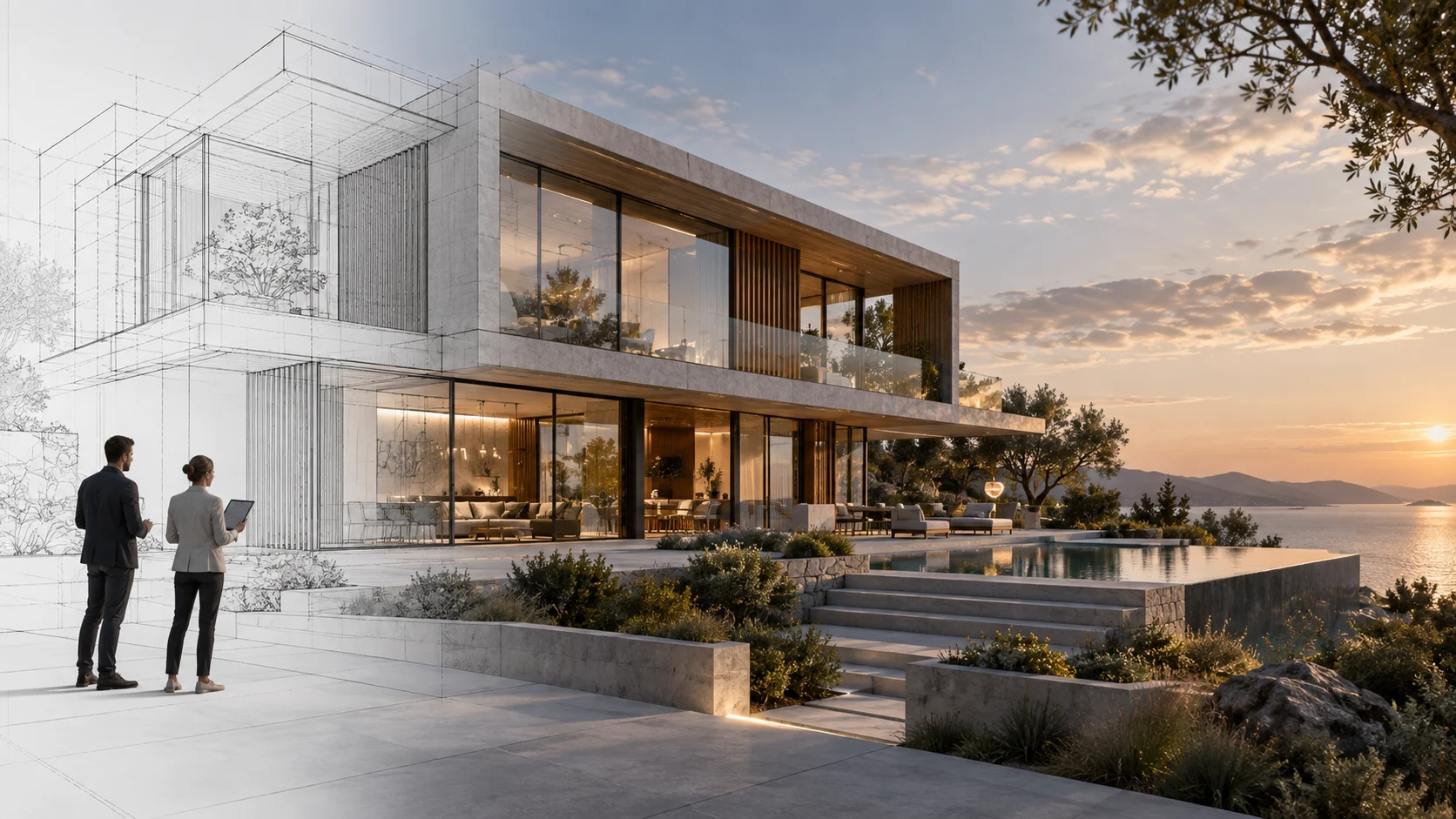
Visualization is moving upstream
Architectural visualization used to arrive near the end of a project, when the design was developed enough to justify polished presentation images. In 2026, the workflow is shifting. The latest AIA/Deltek Architecture Billings Index available, for July, was 46.6, with billings still below the 50-point growth threshold and the downturn approaching three and a half years. New-project inquiries continued to rise, but newly signed design contracts weakened.
At the same time, design technology is accelerating. A 2026 Chaos and Architizer survey of nearly 800 design professionals found that 60% of architecture firms in the sample were actively using AI, while 86% of AI users reported measurable time savings. Half of the respondents were based in North America.
For architects, that combination makes visualization more useful before the final presentation. Quick studies can help compare massing, material direction, daylight, camera positions and key spatial relationships while the project is still flexible. The goal is not to add another deliverable. It is to make important design conversations visible earlier.
Use speed for exploration, precision for decisions
Fast visualization is most valuable when the team is still exploring. In the same 2026 survey, 48% of designers said their biggest AI-related time savings came during concept design and ideation. That is a strong use case for rapid image generation, real-time views and multiple atmospheric or material options.
The standard changes when an image is being used to approve a facade, opening, material, view or other defined design decision. Generative workflows can create persuasive imagery quickly, but visual plausibility is not the same as architectural fidelity. In the Chaos and Architizer findings, 48% of designers identified unreliable output or poor quality as the main barrier to AI adoption, and 70% said AI visualization still requires professional supervision.
A practical workflow separates the two needs. Use speed when the question is, “Which direction should we explore?” Use controlled geometry and verified project information when the question is, “Is this the design we are approving?” That distinction protects both efficiency and design intent.
Keep every image anchored to the design
For an architect, a rendering is useful only if the team knows what it represents. The current BIM or CAD model, drawing set and material information should remain the reference point. Before visualization begins, define which elements are fixed, which are still being developed and which may be interpreted for atmosphere or styling.
That clarity also improves revisions. A change to the architecture is different from a change to the camera, landscaping, furniture or mood. When those categories are separated, feedback becomes easier to price, schedule and resolve, and the image can evolve without quietly drifting away from the project.
Accuracy does not mean the image has to feel technical or sterile. A strong architectural rendering can still communicate light, materiality, human scale and emotion. The difference is that those qualities are built around the actual design rather than replacing it.
Build one visual pipeline from review to presentation
The same coordinated project model can support several levels of communication. Early views can help with internal design review. More developed renderings can support client meetings, competitions and stakeholder presentations. Final scenes can become high-resolution stills, detail crops, animation frames or immersive 360-degree experiences when the project needs them.
This does not mean every project needs every format. Still images remain the most established visualization deliverable, while real-time rendering is becoming a more important part of design workflows. The right mix depends on the decision being made, the audience and the stage of the project, not on which technology is newest.
For architecture firms, the value of 3D rendering is increasingly less about producing a beautiful image at the end. Used strategically, it can shorten the distance between an idea, a review and an approved direction while keeping the visual story aligned with the architecture all the way through presentation.
Explore our architectural visualization services, view the portfolio, or tell us about your project.